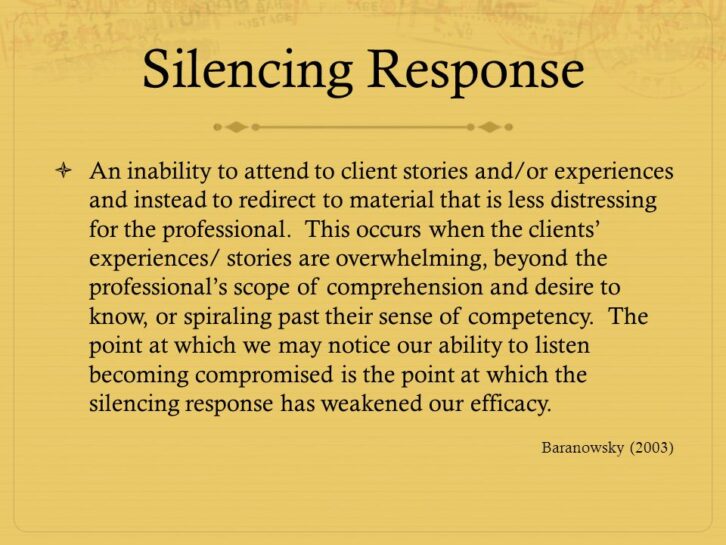
במפגש עם מצוקה אנושית, אנחנו כמטפלים ניצבים בפני אתגר כפול: להקשיב לסיפור האישי, ובו-זמנית לשאת את ההד שלו בתוכנו. לעיתים, כשהעומס הרגשי גדול מדי, נוצרת "תגובת השתקה" (The Silencing Response) – מנגנון הגנה לא מודע שנועד להגן עלינו מפני הצפה, אך בפועל קוטע את הרצף הטיפולי והאנושי.
המחקר הראשוני על תגובת ההשתקה (The silencing response) נערך על מטפלים בניצולי שואה (Danieli, 1994). מחקרים שנערכו מאז מצביעים על הקשר בין שחיקת החמלה (compassion fatigue) לבין תגובת השתקה (Baranowsky, 2002).
תגובת ההשתקה יכולה ללבוש מגוון צורות.
ביטויים לתגובת השתקה
- שינוי נושא כשעולים תכנים טעונים ומכאיבים.
- הימנעות מנושאים מסוימים.
- מזעור מצוקה
- מתן עצות או היצמדות לקלישאות שחוקות.
- גילויי ציניות.
- שימוש בהומור כדי לטשטש או להסיח את הדעת.
- הטלת ספק במה שמספרים לנו.
- אדישות וקהות חושים
תגובות של השתקה שכיחות יותר כשמדובר בהקשבה לסיפורים שמעוררים בנו רגשות או זכרונות שקשה לנו לשאתם.
ככל שנוכל לזהות בזמן אמת את ביטוייה של תגובת ההשתקה, נוכל להשתמש באלה כ"גלאי עשן", איתותי אזהרה המתריעים על הצורך לטפל בעצמנו וגם מאפשר לנו להרחיב את גבולות עצמנו.
לנוע מהשתקה לדיאלוג
אנחנו מוזמנים להקשיב לאיתותים בגופנו המהווים "מרקרים" למקומות בהם קשה לנו להיות נוכחים.
אנחנו יכולים להשתמש באיתותים אלה כדי להעמיק את ההבנה לגבי עצמנו, להרחיב את יכולתנו להיות נוכחים באופן מלא יותר. אנחנו יכולים להיעזר לעיתים גם באחרים כדי לזהות את המקומות שבהם אנחנו משתיקים אחרים או את עצמנו.
המחקר מראה שמידת התמיכה לה זוכה המטפל מהווה גורם משמעותי המפחית את הסיכון להופעת ביטוייה של תגובת ההשתקה בתהליך הטיפולי (ובכלל). בנוסף, נמצא כי מטפלים שקיבלו הכשרה מתאימה, שכללה הגברת מודעות לחסמים בהקשבה ומטפלים שהוכשרו לטיפול בטראומה דיווחו שחווים פחות תחושות של הצפה, מהסוג המוביל לתגובת ההשתקה, ואף על פחות תגובות של הימנעות ונתק בהשוואה למטפלים ללא הדרכה או הכשרה ספציפית בתחום.

פסלים של גד אולמן. צולם במהלך כנס במרכז הבמה, גני תקווה
שלגי, בועז. (2022).לב פקוח לרווחה: על ההתמסרות ההדדית באזורי טראומה. הוצאת תולעת ספרים
Danieli, Y. (1994). Countertransference, trauma and training. In J.P. Wilson & J. Lindy (Eds.), Countertransference in the treatment of post-traumatic stress disorder (p. 368-388). NY:Guilford Press.
Baranowsky, A. (2002). The silencing response in clinical practice: On the road to dialogue. In Figley, Charles R. (Ed.), Treating compassion fatigue (pp. 155–170). Brunner-Routledge.
Baranowsky, A., & Schmidt, D. (2013). Overcopers: Medical doctor vulnerability to compassion fatigue. In C. Figley, P. Huggard, & C. E. Rees (Eds.), First do no self-harm: Understanding and promoting physician stress resilience (pp. 203–215). Oxford University Press.
Velasco, J., Sanmartín, F. J., Gálvez-Lara, M., Cuadrado, F., & Moriana, J. A. (2023). Psychological effects of professional exposure to trauma and human suffering: Systematic review and meta-analysis. Trauma, Violence, & Abuse, 24(3), 1656–1676.
Želeskov-Đorić, J., Hedrih, V., & Đorić, P. (2012). Relations of resilience and personal meaning with vicarious traumatization in psychotherapists. International Journal of Psychotherapy, 16(3), 44–55.
Silencing Response Scale (Baranowsky, 2011)
INSTRUCTIONS: This scale was developed to help caregivers identify specific communication struggles in their
work. Choose the number that best reflects your experience using the following rating system, where 0 signifies
rarely or never and 10 means very often. Answer all items to the best of your ability as they reflect your feelings
over the previous two work weeks.
Rarely/Never= 0———1——–2———-3——–4———5——–6——–7——–8——–9——-10 =Always
Sometimes
(1) Are there times when you believe your client is repeating emotional issues you feel were already
covered?
(2) Do you get angry with client(s)?
(3) Are there times when you react with sarcasm toward your client(s)?
(4) Are there times when you fake interest?
(5) Do you feel that listening to certain experiences of your client(s) will not help?
(6) Do you feel that letting your client talk about their trauma will hurt them?
(7) Do you feel that listening to your client's experiences will hurt you?
(8) Are there times that you blame your client for the bad things that have happened to them?
(9) Are there times when you are unable to believe what your client is telling you because what they are
describing seems overly traumatic?
(10) Are there times when you feel numb, avoidant or apathetic before meeting with certain clients?
(11) Do you consistently support certain clients in avoiding important therapeutic material despite ample time
to address their concerns?
(12) Are there times when sessions do not seem to be going well or the client's treatment progress appears to
be blocked?
(13) Do you become negatively aroused when a client is angry with you?
(14) Are there times when you cannot remember what a client has just said?
(15) Are there times when you cannot focus on what a client is saying?
by: Anna Baranowsky, Ph.D., Traumatology Institute www.psychinc.com
אשלח את הגרסה המתורגמת לעברית לכל המעונין