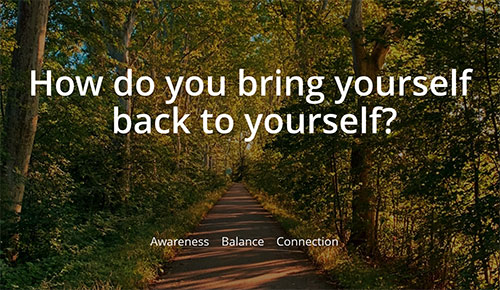
This paper explores the "Moving Encounters in Nature" (MOVING) program, developed over thirty years at the Israel Crisis Management Center. Designed to support Israeli families affected by terrorism and traumatic events, and to assist healthcare workers, the program takes a modular approach that weaves together nature immersion, creative expression, and group reflection. Participants connect to nature's regenerative power through hands-on activities and metaphor-rich experiences. Each workshop explores themes of resilience, survival, and growth, drawing inspiration from nature's capacity to adapt after fire and harsh conditions.
Program Objectives
- Cultivate nature connectedness: Deepen participants' sensory awareness, emotional responsiveness, and sense of purpose through direct engagement with nature.
- Foster a sense of belonging: Moving together in nature, participants experience interconnectedness with others and find their "place in the family of things" (Oliver, in appendix).
- Promote emotional safety and self-expression: Creative activities and metaphor help participants express their experiences within a supportive community.
- Facilitate narrative transformation: Participants collaboratively construct narratives of resilience, finding meaning and strength in their experiences.
Target Groups
The program is tailored for bereaved families, caregivers, and individuals of varying ages, offering age-appropriate formats that foster bonding, emotional regulation, and resilience. Caregivers, for example, benefit from practices that counter burnout while reinforcing their capacity to stay grounded and care for themselves as they care for others.
The Structure of the Program
Workshops typically run three hours, though the format can be adjusted to fit specific needs and constraints. A typical workshop unfolds in three phases:
Phase I: Nature Immersion
- Introduction: A brief framing by the facilitator sets the stage for the outdoor experience and outlines the workshop's goals and expectations.
- Mindful nature walk: A guided, unhurried walk designed to foster mindfulness and sensory awareness, encouraging participants to:
- Practice grounding – returning attention to the present moment in the face of distraction, rumination, and overthinking.
- Engage their senses – noticing sights, sounds, smells, and tactile sensations.
- Observe natural phenomena – the growth patterns of plants, the interplay of light and shadow.
Phase II: Creative Expression
- Nature-inspired art: Participants create using natural materials – leaves, stones, branches – exploring personal meaning and transformation through them.
- Group sharing: Participants share their creations and the insights gained from the walk and the activity, building community and mutual support.
Phase III: Reflection and Integration
- Collective reflection: A guided discussion on the workshop's themes – survival, regeneration, growth in nature.
- Poetic synthesis: The group co-creates a poem from phrases and sentences drawn from participants' shared experiences – a tool for collective reflection, emotional expression, and shared narrative.
Five Pathways to Nature Connectedness
The program draws on the five pathways to nature connectedness – contact, emotion, meaning, compassion, and beauty – identified by Lumber, Richardson, and Sheffield (2017) at the University of Derby. Integrating these pathways gives participants a framework for cultivating resilience, enhancing well-being, and navigating life's challenges.
The Pathway of Contact
The connection between people and nature is rooted in sensory engagement. Tuning into the sights, sounds, smells, tastes, and textures of the natural world cultivates grounding and centering. As one participant put it: nature had taught them to bring themselves back to themselves when overwhelmed. This heightened awareness deepens a sense of interconnectedness and one's place in the natural world, fostering wonder and awe – a felt sense that there is a season and a rhythm to everything.
Gentle physical activity -mindful walking, stretching, breathing – helps participants reconnect with the present moment. Body-centered practices activate the parasympathetic nervous system, countering the fight-flight-freeze response and restoring physical and emotional equilibrium.
The Pathway of Emotion
Whether through quiet contemplation of a landscape or the exhilaration of an outdoor adventure, nature evokes a wide range of emotion. Feelings that are powerful – sometimes overwhelming, sometimes hard to name – become easier to understand once acknowledged and expressed, including through non-verbal modalities.
This is especially true after trauma or loss. Nature, in its vastness and adaptability, offers a safe, supportive space in which difficult emotions can surface, be held, and gradually processed.
The Pathway of Meaning
One participant, hugging a tree, reflected that despite storms it remained rooted and upright — and that this might lend them strength to weather life's adversities. Another described being surprised to find their perspective shifting simply by noticing what they hadn't noticed before. Such moments speak to the potential for growth and healing when new perspectives emerge and personal experience is validated.
Grounding oneself is often hard, stirring feelings of vulnerability and dislocation – much like a transplanted tree. Connecting with nature in these moments helps restore a sense of continuity amid disruption. One participant observed that a transplanted tree's chances of survival improve in an environment that lets new roots grow alongside old ones — a metaphor that resonates for anyone in transition, from refugees to those facing life-altering change, and speaks to the need to integrate one's history while embracing new possibility.
Every organism, another participant noted, has its own way of adapting to changing conditions – a reminder that each person's pace and journey are unique. By observing nature's cycles of life, death, and renewal, participants learn to validate their own paths, drawing strength from the knowledge that coping takes many forms, shaped by identity, history, and inner and outer resources.
The Pathway of Compassion
Time spent together in nature fosters caring and togetherness, strengthening bonds between individuals, families, and communities. In the presence of kindness, shared experience in nature builds empathy – for one another and for the natural world. Moving together through a landscape, synchronizing steps with its rhythm, cultivates a sense of togetherness and generosity.
Nature-based metaphor deepens this capacity for compassion. Drawing parallels between natural processes and human experience helps participants understand life's challenges, and listening to the metaphors people spontaneously offer validates their experience and fosters shared humanity – a reminder that we are each part of a larger network, bound by the same natural forces, and belong, as Oliver writes, to the family of things.
The Pathway of Beauty
For people who have experienced trauma or loss, appreciating beauty can be difficult – grief can overshadow the joy of connecting with nature aesthetically.
Nature-based workshops help reawaken wonder: mindful walks and creative activities draw attention to the environment's intricate details, from the pattern of a leaf to the expanse of the sky. Sharing memories of loved ones and carrying their legacy forward, participants often begin to notice what they'd previously overlooked. This renewed connection can bring comfort, offering a place to gradually let go, and to be guided back to oneself.
Attention Restoration and Neuroscience: The Power of Nature
Neuroscience research increasingly highlights nature's role in restoring attention and mental clarity under stress or cognitive fatigue. Attention Restoration Theory (ART) describes "soft fascination" – a gentle, effortless engagement that captures attention without overwhelming it, letting directed-attention resources replenish. fMRI and EEG studies show reduced prefrontal cortex activity – the region governing cognitive control and working memory, often overtaxed by modern life – when people are immersed in natural settings. This rest shifts the brain toward a more relaxed, open state, supporting cognitive function, emotional regulation, and resilience upon return to daily tasks.
The MOVING program's mindful, immersive activities – walking, observing seasonal change, exploring texture and color – engage attention in ways that calm the nervous system, reduce stress, and promote clarity. For those coping with trauma, burnout, or grief, this restored attention supports psychological flexibility and adaptability in the face of life's challenges.
Cultivating Self-Compassion
Neff (2003, p. 87) describes self-compassion as being open to one's own suffering rather than avoiding it – generating the wish to ease that suffering and meet it with kindness. Her model identifies three interacting dimensions: self-kindness versus self-judgment, common humanity versus isolation, and mindfulness versus over-identification – each shaping how a person copes with pain. The MOVING program cultivates self-compassion by weaving all three together:
- Self-kindness: Participants are guided to notice and gently challenge self-critical inner dialogue, replacing it with a more supportive, forgiving voice. Shared experience and mutual support in nature let participants practice extending to themselves the same kindness they'd offer others in distress; metaphor and the parallel processes observed in nature help them see personal struggle as a natural part of life.
- Common humanity: Group settings bring participants together in a way that acknowledges difference while affirming suffering as universal. Sharing stories and vulnerability within a supportive community eases isolation and builds belonging – in a forest, for instance, participants may notice how trees in close groves support one another under adverse conditions, a living illustration of interconnectedness.
- Mindfulness: Participants learn to stay present with emotion without judgment or avoidance. Mindful walks – moving attention step by step from inner experience outward to sight, sound, and smell – teach them to hold thoughts and feelings without over-identifying with them, seeing emotional waves as natural and transient, and grounding them in nature's sensory richness.
Practical Considerations for Facilitators Working with the Bereaved
- Gradual exposure: Begin with shorter, less intense experiences and increase duration and intensity as participants grow more comfortable.
- Mindful nature walks: Emphasize grounding techniques that help participants stay present.
- Gentle activities: Choose simple, non-intrusive activities that let participants set their own pace and take breaks as needed.
- Individualized support: Tailor guidance to each participant's specific needs and preferences.
Attending to these factors helps facilitators create a safe, supportive space for grieving individuals to reconnect with themselves and with nature.
Nature-Based Workshops for Healthcare Workers
Healthcare workers face significant risk of burnout and compassion fatigue, with real costs to mental and physical health. Nature-based workshops, structured around the five pathways, can help them to:
- Contact: Build present-moment awareness through mindfulness practice in nature.
- Emotion: Express, regulate, and process emotion in a safe setting.
- Meaning: Reconnect with the value of their work and of the natural world.
- Compassion: Practice self-compassion and extend compassion to others, drawing on nature's interconnectedness.
- Beauty: Cultivate awe and wonder as a counterweight to cynicism and detachment.
Incorporated into daily life, these experiences can strengthen resilience, improve job satisfaction, and help healthcare workers balance caring for themselves with caring for others.
Practical Considerations for Working with Healthcare Workers
- Accessibility and inclusivity: Choose locations that are easy to reach; plan activities accordingly.
- Cultural sensitivity: Attend to cultural differences and preferences.
- Timing and scheduling: Coordinate with work schedules to support attendance.
- Duration: Offer both short, intensive sessions and longer, retreat-style formats.
- Adaptability: Be ready to adjust activities to group dynamics and individual needs – offer alternatives, since not everyone will be comfortable with every activity.
- Follow-up: After the workshop, provide resources and exercises that continue the self-compassion work.
Recommendations for Future Research and Practice
- Expand access to nature-based programs through supportive policy.
- Integrate nature-based interventions into clinical settings and burnout/compassion-fatigue prevention programs.
- Conduct longitudinal studies on the long-term impact of nature-based interventions on well-being and resilience.
References
Anderson, C. L., Monroy, M., & Keltner, D. (2018). Awe in nature heals: Evidence from military veterans, at-risk youth, and college students. Emotion, 18(8), 1195–1202.
Barnes, M. R., Donahue, M. L., Keeler, B. L., Shorb, C. M., Mohtadi, T. Z., & Shelby, L. J. (2019). Characterizing nature and participant experience in studies of nature exposure for positive mental health: An integrative review. Frontiers in Psychology, 9, Article 261.
Berger, R., & Tiry, M. (2012). The enchanting forest and the healing sand- Nature therapy with people coping with psychiatric difficulties. The Arts in Psychotherapy, 39(5), 412–416.
Berman, M. G., Jonides, J., & Kaplan, S. (2008). The cognitive benefits of interacting with nature. Psychological Science, 19(12), 1207–1212.
Bratman, G. N., Hamilton, J. P., Hahn, K. S., Daily, G. C., & Gross, J. J. (2015). Nature experience reduces rumination and subgenual prefrontal cortex activation. Proceedings of the National Academy of Sciences, 112(28), 8567–8572.
Burger, T., Potgieter, J. C., & Nell, W. (2024). Methods and environmental conditions typical of nature-based mindfulness practice: A scoping review. Mindfulness, 15(7), 1621–1637.
Christens, B. D., McCormick, M. L., & Wolf, J. (2025). Understanding and promoting nature connectedness: A human ecological perspective. Current Opinion in Psychology, 65, Article 102046.
Ekkekakis, P., Hall, E. E., VanLanduyt, L. M., & Petruzzello, S. J. (2000). Walking in (affective) circles: Can short walks enhance affect? Journal of Behavioral Medicine, 23(3), 245–275.
Hartig, T. (2021). Restoration in nature: Beyond the conventional narrative. In A. R. Schutte, J. C. Torquati, & J. R. Stevens (Eds.), Nature and Psychology (Vol. 67, pp. 89–151). Springer International Publishing.
Howell, A. J., Dopko, R. L., Passmore, H.-A., & Buro, K. (2011). Nature connectedness: Associations with well-being and mindfulness. Personality and Individual Differences, 51(2), 166–171.
Korpela, K. M., Stengård, E., & Jussila, P. (2016). Nature walks as a part of therapeutic intervention for depression. Ecopsychology, 8(1), 8–15.
Kotera, Y., Richardson, M., & Sheffield, D. (2022). Effects of shinrin-yoku (forest bathing) and nature therapy on mental health: A systematic review and meta-analysis. International Journal of Mental Health and Addiction, 20(1), 337–361.
Lee, E. E., Govind, T., Ramsey, M., Wu, T. C., Daly, R., Liu, J., Tu, X. M., Paulus, M. P., Thomas, M. L., & Jeste, D. V. (2021). Compassion toward others and self-compassion predict mental and physical well-being: A 5-year longitudinal study of 1090 community-dwelling adults across the lifespan. Translational Psychiatry, 11(1), 397.
Lengieza, M. L., & Aviste, R. (2025). Relationships between people and nature: Nature connectedness and relational environmental values. Current Opinion in Psychology, 62, Article 101984
Lumber, R., Richardson, M., & Sheffield, D. (2017). Beyond knowing nature: Contact, emotion, compassion, meaning, and beauty are pathways to nature connection. PLoS ONE, 12(5), Article e0177186.
Martin, L., White, M. P., Hunt, A., Richardson, M., Pahl, S., & Burt, J. (2020). Nature contact, nature connectedness and associations with health, wellbeing and pro-environmental behaviours. Journal of Environmental Psychology, 68, Article 101389.
Mayer, F. S., Frantz, C. M., Bruehlman-Senecal, E., & Dolliver, K. (2009). Why is nature beneficial? The role of connectedness to nature. Environment and Behavior, 41(5), 607–643.
Mellor, C., Botchway, S., Barnes, N., & Gandy, S. (2022). Seeding hope: Restoring nature to restore ourselves. Nature restoration as an essential mental health intervention. International Review of Psychiatry, 34(5), 541–545.
Neff, K. D. (2003). Self-compassion: An alternative conceptualization of a healthy attitude toward oneself. Self and Identity, 2(2), 85–101.
Neff, K., & Germer, C. K. (2018). The mindful self-compassion workbook: A proven way to accept yourself, build inner strength, and thrive. Guilford Press.
Pasca, L., Carrus, G., Loureiro, A., Navarro, Ó., Panno, A., Tapia Follen, C., & Aragonés, J. I. (2022). Connectedness and well-being in simulated nature. Applied Psychology: Health and Well-Being, 14(2), 397–412.
Payne, H. (2023). Nature connectedness and the discipline of authentic movement. Body, Movement and Dance in Psychotherapy, 18(4), 275–289.
Petersen, E., Fiske, A. P., & Schubert, T. W. (2019). The role of social relational emotions for human-nature connectedness. Frontiers in Psychology, 10, Article 2759.
Schutte, N. S., Bhullar, N., Stilinović, E. J., & Richardson, K. (2017). The impact of virtual environments on restorativeness and affect. Ecopsychology, 9(1), 1–7.
Shapiro, S. L., Brown, K. W., & Biegel, G. M. (2007). Teaching self-care to caregivers: Effects of mindfulness-based stress reduction on the mental health of therapists in training. Training and Education in Professional Psychology, 1(2), 105–115.
Weinstein, N., Przybylski, A. K., & Ryan, R. M. (2009). Can nature make us more caring? Effects of immersion in nature on intrinsic aspirations and generosity. Personality and Social Psychology Bulletin, 35(10), 1315–1329.
Wohlleben, P. (2016). The hidden life of trees: What they feel, how they communicate – Discoveries from a secret world. Black Inc.
Yang, Y., Sedikides, C., Wang, Y., & Cai, H. (2024). Nature nurtures authenticity: Mechanisms and consequences. Journal of Personality and Social Psychology, 126(1), 79–104.
Resources in Hebrew
"כי האדם עץ השדה" – סדנאות בחיק הטבע למטפלים
Appendix: Selected Poems for Workshop Integration
This appendix includes a selection of poems chosen to complement the workshop experience. These pieces can be read aloud, reflected upon, or used as prompts for discussion, offering participants meaningful insights and emotional resonance to deepen their journey.
When I am among the trees
Mary Oliver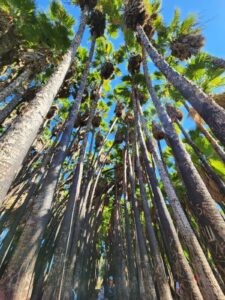
When I am among the trees,
especially the willows and the honey locust,
equally the beech, the oaks and the pines,
they give off such hints of gladness.
I would almost say that they save me, and daily.
I am so distant from the hope of myself,
in which I have goodness, discernment,
and never hurry through the world
but walk slowly, and bow often.
Around me the trees stir in their leaves
and call out, “Stay awhile.”
The light flows from their branches.
And they call again, “It’s simple,” they say,
“and you too have come
into the world to do this, to go easy, to be filled
with light, and to shine.”
****
Lost
David Wagoner
Stand still. The trees ahead and bushes beside you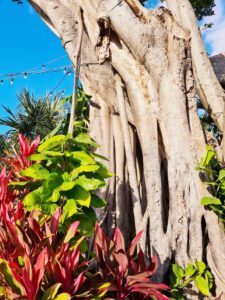
Are not lost. Wherever you are is called Here,
And you must treat it as a powerful stranger,
Must ask permission to know it and be known.
The forest breathes. Listen. It answers,
I have made this place around you.
If you leave it, you may come back again, saying Here.
No two trees are the same to Raven.
No two branches are the same to Wren.
If what a tree or a bush does is lost on you,
You are surely lost. Stand still. The forest knows
Where you are. You must let it find you
****
The Moment
Margaret Atwood
The moment when, after many years
of hard work and a long voyage
you stand in the centre of your room,
house, half-acre, square mile, island, country,
knowing at last how you got there,
and say, I own this,
is the same moment when the trees unloose
their soft arms from around you,
the birds take back their language,
the cliffs fissure and collapse,
the air moves back from you like a wave
and you can’t breathe.
No, they whisper. You own nothing.
You were a visitor, time after time
climbing the hill, planting the flag, proclaiming.
We never belonged to you.
You never found us.
It was always the other way round.
****
Remember
Joy Harjo
Remember the sky that you were born under,
know each of the star’s stories.
Remember the moon, know who she is.
Remember the sun’s birth at dawn, that is the
strongest point of time. Remember sundown
and the giving away to night.
Remember your birth, how your mother struggled
to give you form and breath. You are evidence of
her life, and her mother’s, and hers.
Remember your father. He is your life, also.
Remember the earth whose skin you are:
red earth, black earth, yellow earth, white earth
brown earth, we are earth.
Remember the plants, trees, animal life who all have their
tribes, their families, their histories, too. Talk to them,
listen to them. They are alive poems.
Remember the wind. Remember her voice. She knows the
origin of this universe.
Remember you are all people and all people
are you.
Remember you are this universe and this
universe is you.
Remember all is in motion, is growing, is you.
Remember language comes from this.
Remember the dance language is, that life is.
Remember.
****
Lines Written in Early Spring
William Wordsworth
I heard a thousand blended notes,
While in a grove I sate reclined,
In that sweet mood when pleasant thoughts
Bring sad thoughts to the mind.
To her fair works did Nature link
The human soul that through me ran;
And much it grieved my heart to think
What man has made of man.
Through primrose tufts, in that green bower,
The periwinkle trailed its wreaths;
And ’tis my faith that every flower
Enjoys the air it breathes.
The birds around me hopped and played,
Their thoughts I cannot measure:-
But the least motion which they made
It seemed a thrill of pleasure.
The budding twigs spread out their fan,
To catch the breezy air;
And I must think, do all I can,
That there was pleasure there.
If this belief from heaven be sent,
If such be Nature's holy plan,
Have I not reason to lament
What man has made of man?
****
The Trees
Philip Larkin
The trees are coming into leaf
Like something almost being said;
The recent buds relax and spread,
Their greenness is a kind of grief.
Is it that they are born again
And we grow old? No, they die too.
Their yearly trick of looking new
Is written down in rings of grain.
Yet still the unresting castles thresh
In fullgrown thickness every May.
Last year is dead, they seem to say,
Begin afresh, afresh, afresh.
****
The Peace of Wild Things
Wendell Berry
When despair for the world grows in me
and I wake in the night at the least sound
in fear of what my life and my children’s lives may be,
I go and lie down where the wood drake
rests in his beauty on the water, and the great heron feeds.
I come into the peace of wild things
who do not tax their lives with forethought
of grief. I come into the presence of still water.
And I feel above me the day-blind stars
waiting with their light. For a time
I rest in the grace of the world, and am free.
****
Wild geese
Mary Oliver
You do not have to be good.
You do not have to walk on your knees
for a hundred miles through the desert, repenting.
You only have to let the soft animal of your body
love what it loves.
Tell me about despair, yours, and I will tell you mine.
Meanwhile the world goes on.
Meanwhile the sun and the clear pebbles of the rain
are moving across the landscapes,
over the prairies and the deep trees,
the mountains and the rivers.
Meanwhile the wild geese, high in the clean blue air,
are heading home again.
Whoever you are, no matter how lonely,
the world offers itself to your imagination,
calls to you like the wild geese, harsh and exciting–
over and over announcing your place
in the family of things.